
Payments would give state, native police energy to convey down drones
By DRONELIFE Options Editor Jim Magill
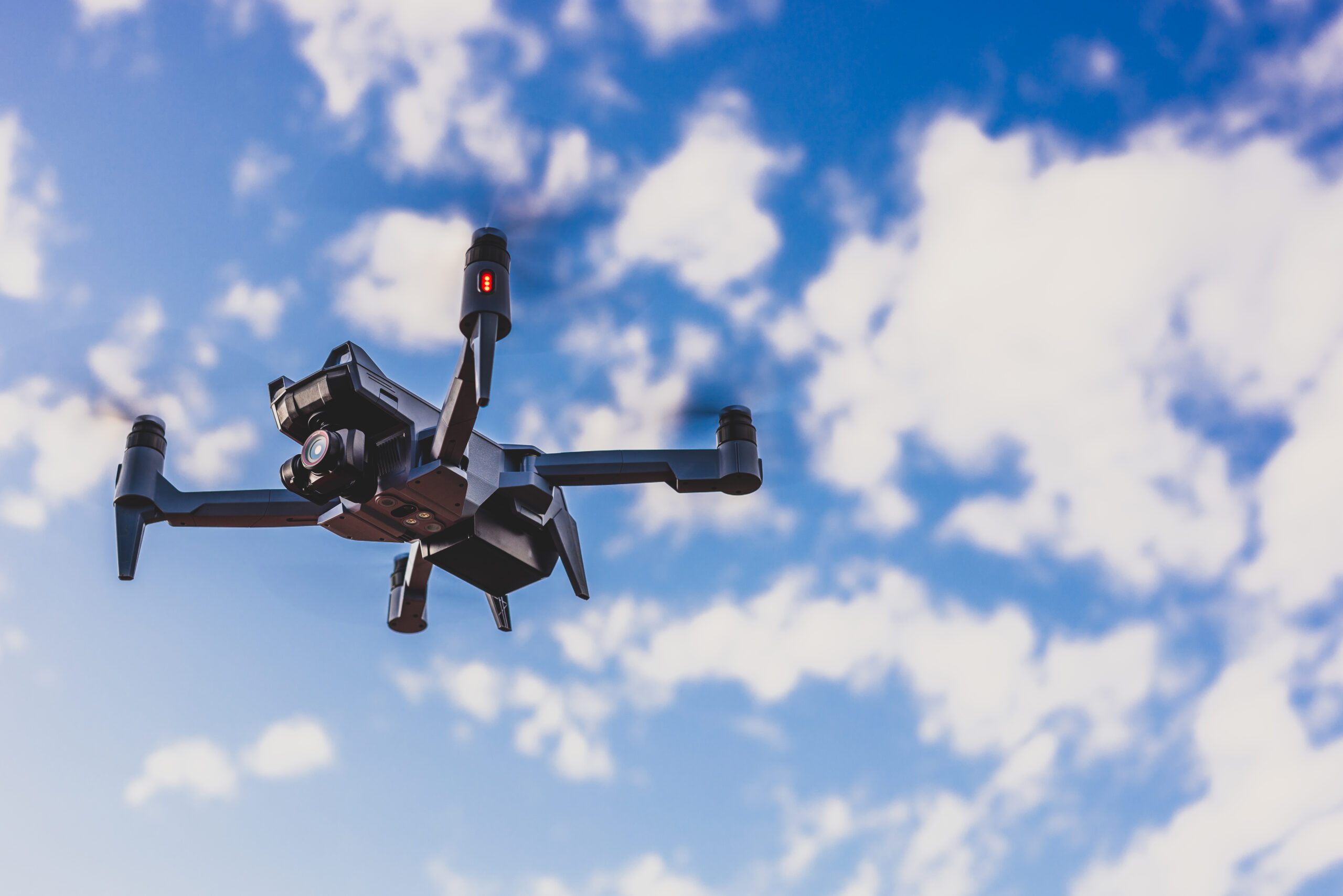
A invoice being thought-about by the Michigan state legislature would give non-federal legislation enforcement officers within the state the authority to disable or destroy an unmanned plane flying in a way that poses a threat to public security or that's flying in violation of Federal legislation or FAA pointers. Below present federal legislation, solely sure federal legislation enforcement companies are designated with the authorized authority to convey down drones.
The proposed laws is only one a part of a package deal of UAS-related payments, being introduced ahead by State Consultant Invoice Bruck.
Different payments within the package deal would: prohibit state companies from buying drones or associated gear from corporations named on the U.S. division of Protection listing of corporations with important connections to the Chinese language army; require public companies within the state to submit an inventory of nations they won't purchase drones from; and would prohibit the operation of a drone over a legislation enforcement facility, a correctional facility, or another website designated as vital infrastructure.
In an interview, Bruck acknowledged that some state measures to offer non-federal legislation enforcement companies the authority to conduct counter-UAS measures that end in a drone being taken out of the sky may very well be pre-empted by federal legislation. A draft of his invoice to amend the state’s Unmanned Plane Programs Act states that the portion of the invoice authorizing such actions wouldn't apply “until federal legislation is amended to permit a police officer to intercept, disable or destroy an unmanned plane.”
He famous that there are a number of payments pending earlier than Congress that will give non-federal legislation enforcement companies larger authority to conduct counter-UAS operations, together with using kinetic and non-kinetic measures to convey down drones. However he mentioned the potential risk to life and property from errant drones requires state corresponding to Michigan to take daring motion instantly, somewhat than ready for the federal legislation to catch up.
“We're pushing the envelope,” he mentioned. “We, as a state — I ought to say, each state — must have some potential with the intention to counteract drone exercise. To place it merely, we're ready for the following catastrophe relating to drones.”
Bruck mentioned that beneath his proposed laws native police forces, in addition to skilled personal safety forces licensed by the state, would have the ability to make the most of counter-UAS capabilities at vital infrastructure places within the state, corresponding to prisons and legislation enforcement services.
The laws does comprise some safeguards to ensure the rights of professional drone operators whose plane are broken or destroyed by such police actions, he mentioned.
“They’re not exempted from any liabilities, in the event that they inappropriately took down a drone and precipitated harm,” Bruck mentioned. “Nevertheless, if a drone was inside the enviornment of vital infrastructure, that will be prohibited by one other invoice that’s within the package deal, that they (legislation enforcement) would have the ability to counter that unmanned aerial system.”
Michigan is simply the newest state to think about granting larger authority to state and native legislation enforcement officers to convey down what are thought-about to be threatening drones. In June, Louisiana grew to become the primary state to problem the federal authorities’s primacy in regard to counter-UAS operations, when Governor Jeff Landry signed into legislation a invoice “that authorizes state and native legislation enforcement to actively intercept and disable drones that pose credible threats to public security.”
Increasing the listing of coated vital websites
Robert Blackshaw, government director of the Michigan State Capitol Fee, cheered the proposed laws and mentioned he wished to make sure that the State Capitol be included on the listing of vital websites to be protected by counter-UAS measures. In an interview, Blackshaw, whose company oversees the conduct of guided excursions, restoration and safety on the State Capitol constructing, mentioned the necessity to shield the historic constructing from the potential drone assaults “is turning into an awesome challenge.”
Blackshaw mentioned the elevated prevalence of drones working inside that state’s airspace requires some type of counter-UAS response by legislation enforcement on a state or native stage.
“Everyone knows that inside a yr or two, Amazon’s going to be flying drones. We all know the police are going to make use of drones for accident evaluations and other people use drones for different issues,” he mentioned. “We do know the FAA and the FBI; they’re going to be overwhelmed. The coverage must be put in place to allow them to push this right down to extra native enforcement officers to assist mitigate this challenge that's rising every day.”
Additionally included in Bruck’s package deal of UAS-related laws are a number of associated measures that concentrate on using Chinese language-made drones by any entity that’s a part of, or that receives monetary help from the state.
“A state company, unit of native authorities, college, neighborhood school or entity that receives cash from a state company or native unit of presidency is topic to the identical restrictions and prohibitions that apply to the acquisition or acquisition of drones that apply to the federal authorities,” reads a invoice to amend the state’s Administration and Funds act.
Learn extra:
 Jim Magill is a Houston-based author with virtually a quarter-century of expertise protecting technical and financial developments within the oil and fuel trade. After retiring in December 2019 as a senior editor with S&P World Platts, Jim started writing about rising applied sciences, corresponding to synthetic intelligence, robots and drones, and the methods by which they’re contributing to our society. Along with DroneLife, Jim is a contributor to Forbes.com and his work has appeared within the Houston Chronicle, U.S. Information & World Report, and Unmanned Programs, a publication of the Affiliation for Unmanned Car Programs Worldwide.

Miriam McNabb is the Editor-in-Chief of DRONELIFE and CEO of JobForDrones, an expert drone providers market, and a fascinated observer of the rising drone trade and the regulatory atmosphere for drones. Miriam has penned over 3,000 articles targeted on the business drone house and is a global speaker and acknowledged determine within the trade. Miriam has a level from the College of Chicago and over 20 years of expertise in excessive tech gross sales and advertising for brand spanking new applied sciences.
For drone trade consulting or writing, E mail Miriam.
TWITTER:@spaldingbarker
Subscribe to DroneLife right here.