
Flytrex, Little Caesars join in first-of-kind pizza delivery
By DRONELIFE Features Editor Jim Magill
Over the past several years, residents of the Dallas/Fort Worth (DFW) region have become used to having food and other small items delivered to their homes by drone, but one commonly delivered food item was largely missing from the UAV-borne menu – pizza.
But last month, Flytrex, a drone delivery business based in Israel, and Little Caesars restaurants announced they had teamed up to start a service to delivery family-sized pizza meals to residences in the Dallas suburb of Wylie, Texas.
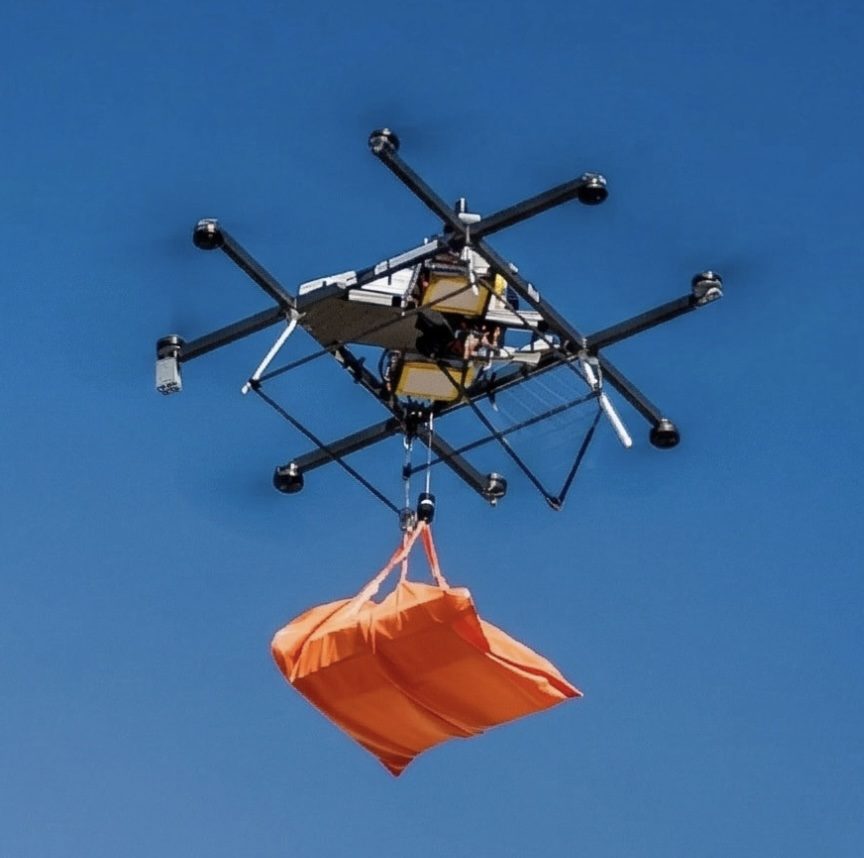
Using its new octocopter Sky2 drone, with a capability of carrying an 8.8-pound cargo, Flytrex is able to deliver two large piping-hot pizzas and drinks to homes near the local Little Caesars restaurant within 5 minutes of the customer placing the order.
In an interview with DroneLife, CEO Amit Regev said the Flytrex-Little Cesar partnership has been several years in the making.
“We actually started working with Little Caesars back in 2023, so it’s been a few years. But back then, we were using an older model of the drone, so we couldn’t really carry these large pizzas,” he said. Although the Tel Aviv-based company has been partnering with casual-dining restaurants in the DFW metroplex for more than three years, delivery of the Italian fast-food staple remained a long-sought goal.
“We basically have sent everything else that’s not a pizza, because we couldn’t fit that,” Regev said.
However, the development of the proprietary Sky2 drone has proven to be a game-changer for Flytrex’s business model. Regev credited the aircraft’s eight-motor configuration with providing the hauling strength and durability needed for successful pizza delivery.
“This might just be my personal opinion — but if you want to meet the safety standard of drone deliveries at scale you really need eight or more motors,” he said. “And it’s not just safety, it’s about unit economics. When you have eight motors, you’re required to do less maintenance because the motors are no longer critical parts.” He noted that even if the drone were to lose the service of one of its motors in midflight, it could still complete its delivery mission and return to its home base.
The Sky2’s architecture is designed with multiple redundancies to ensure full-flight reliability. “You have two GNSSs [Global Navigation Satellite systems], with two RTKs [Real-Time Kinematic systems] on top of the drone, and multiple flight controllers. There’re two batteries, so we can fly even if we lose one, and so on,” Regev said.
In addition, he said the aircraft’s unique design also allows the operators to employ different cargo-loading modalities based on the needs of the type of payload to be delivered.
“At some of the restaurants, we would do what we call remote pickup, where the drone flies to the restaurant, we lower this hook, we place the food on the hook, we retract the food back and fly to the customer,” Regev said. “We have different types of mechanisms that allow us to do these different pickups in different points.”
Compared with other delivery drone models, the Sky2 also has an extended flight duration, which allows deliveries in a 4-mile radius. Once the delivery is completed, the autonomous drone lands on this specific pad in the fence-enclosed operations area, for automatic recharging, in preparation of their next delivery mission.
Flytrex system closely linked with Little Caesars
One of the unique aspects of Flytrex’s partnership with Little Caesars is the fact that Flytrex’s system is directly tied into the restaurant’s kitchen dispatch system.
“As soon as an order comes in, it automatically arrives into their point of sale and it’s waiting. Their kitchen immediately prepares the order. At that time, we have a drone that’s been assigned for that delivery,” Regev said. “As soon as we get a notice that the food is ready, the drone takes off.”
The drone climbs to a cruising altitude of about 230 feet, travels to its destination and then descends to about 82 feet above the delivery area. The pizza order enclosed in a special delivery package is lowered by a hook to the waiting customer. Then the drone retracts the hook and flies back to its point of origin to prepare for its next delivery.
Regev said that Flytrex, which also operates in the DFW communities of Little Elm and Frisco, chose Wylie as the ideal site of its first partnership with Little Caesars for a number of reasons, such as the suburban nature of the surrounding community.
“We can’t service in downtown Dallas or in Manhattan because we need these detached homes, we need backyards,” he said. “We are looking for certain a demographic. We usually set our sites in proximity to restaurants. So specifically, you would see all of our sites either within strip malls or adjacent to these strip malls where we have a lot of restaurants to service.”
He added that the company is planning on expanding its operations to a third location in the DFW metroplex within the next several weeks.
Almost a decade of preparation
Offering a new service, such as pizza delivery, or expanding drone delivery operations into a new region takes a lot of preparatory legwork, Regev said.
Flytrex is operating the Wylie site under its status as a Part 135 carrier, which it obtained after engaging in a lengthy relationship with FAA regulators. “We met the FAA the first time under the Integration Pilot Program back in 2017. So, for almost a decade now we’ve been working with them to certify our drones and to certify the operations that we’re doing,” he said.
“When we launch a new site, we always do an outreach in that community that would involve reaching out to the local first responders, letting them know where we’re operating, and reaching out to the local municipality, explaining to them about the service.” In addition to its other outreach efforts, Flytrex also works with the local home association in the communities it plans to serve, to let the residents know about what the drone delivery service entails as well as it benefits to the community.
“And I would say the last interface is with the merchants. We connect with them and we explain to them what the benefits are from the consumer side,” Regev said. The service’s customers are happy because they get faster deliveries and therefore fresher food at the same price as orders delivery by more traditional means.
“On the other hand, from a merchant side, we’re saving them money because our delivery service is cheaper. That’s usually what they care about the most, specifically these smaller restaurants. If you can save some money on the cost of delivery today, they’re very happy with it.”
Read more:



Miriam McNabb is the Editor-in-Chief of DRONELIFE and CEO of JobForDrones, a professional drone services marketplace, and a fascinated observer of the emerging drone industry and the regulatory environment for drones. Miriam has penned over 3,000 articles focused on the commercial drone space and is an international speaker and recognized figure in the industry. Miriam has a degree from the University of Chicago and over 20 years of experience in high tech sales and marketing for new technologies.
For drone industry consulting or writing, Email Miriam.
TWITTER:@spaldingbarker
Subscribe to DroneLife here.