
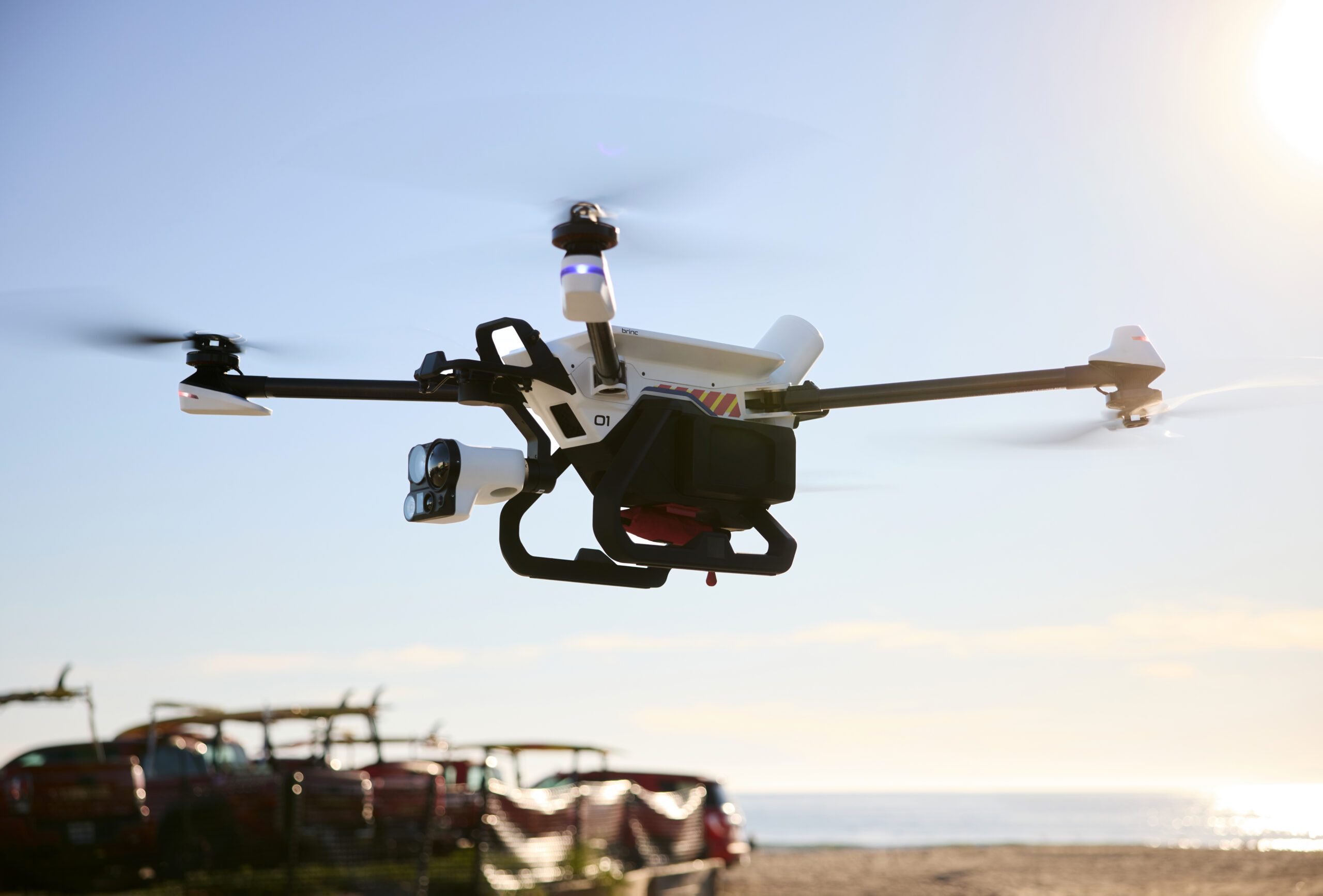
At the recent Motorola Solutions [NYSE: MSI], BRINC CEO Blake Resnick outlined a vision that challenges one of policing’s most dangerous practices: the high-speed vehicle chase. While drones have long supported public safety, their limitations have kept them largely out of active pursuit scenarios. With the introduction of BRINC’s Guardian drone, that boundary may be shifting.

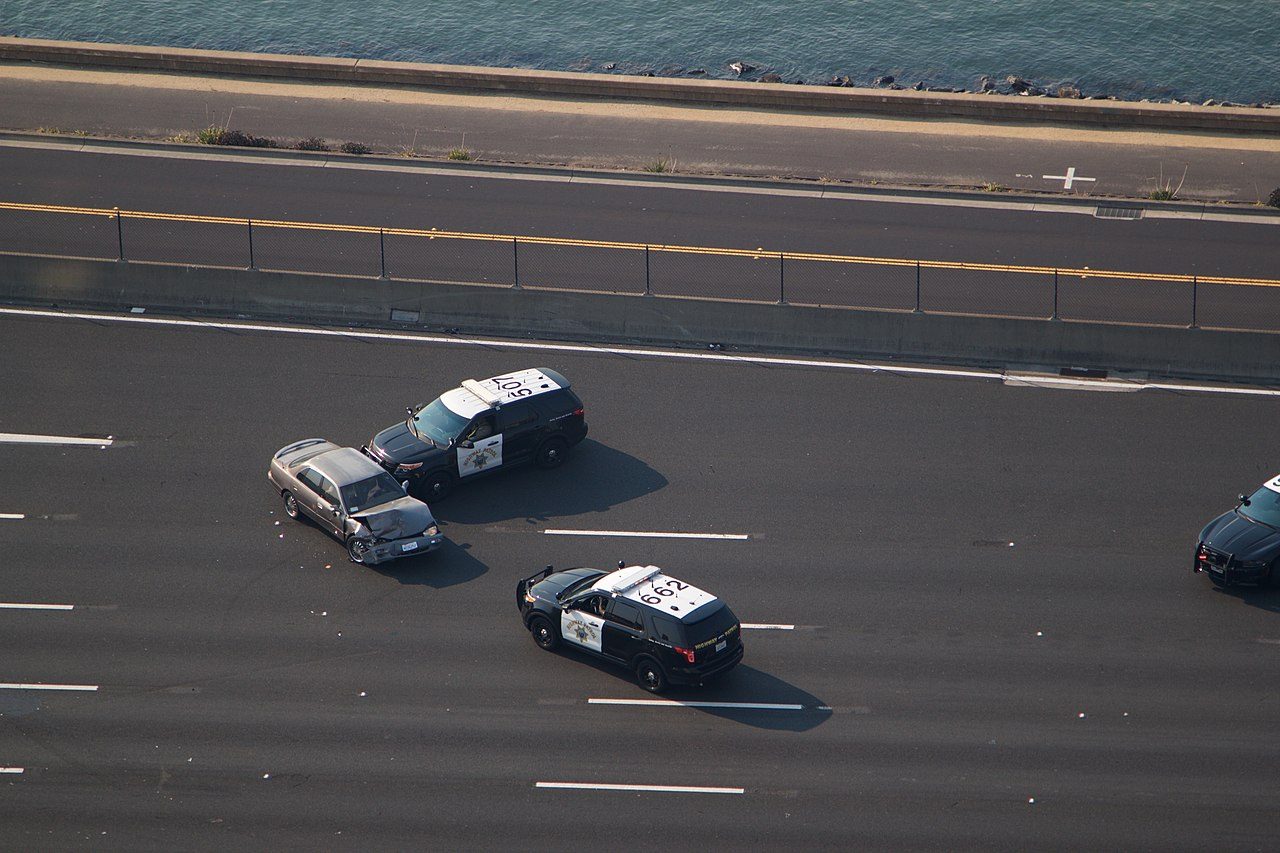
Vehicle pursuits carry well-documented risks. Law enforcement agencies across the U.S. have spent years rethinking pursuit policies because of the danger to officers, suspects, and bystanders. Even when justified, chases can escalate quickly, turning routine incidents into life-threatening events. The core question has remained the same: how do you maintain keep a suspect in view without increasing danger to officers, suspects, or bystanders?
Resnick’s answer is straightforward. “When police get engaged in vehicle pursuits, a lot of lives are put at risk,” he said. “With a drone, you can get to the desired end state without risking any lives.”
Why Pursuit Has Been Out of Reach for Drones
Most drones simply haven’t been built for the job. Traditional public safety UAVs struggle with three key constraints: speed, endurance, and connectivity. Many cannot keep up with a moving vehicle, especially over longer distances. Others lack the battery life to stay on target. And perhaps most critically, they rely on cellular networks that can become unreliable during extended operations or as a suspect moves throughout an urban environment.
Guardian was designed to address those gaps directly.
According to BRINC, the platform offers more than 60 minutes of flight time and speeds exceeding 60 miles per hour. It also integrates Starlink satellite connectivity, allowing the drone to maintain a stable data link even when cellular coverage drops out.
That combination changes the equation. A drone that can keep pace, stay airborne, and remain connected becomes a viable alternative to ground pursuit.
A Different Kind of Aerial Asset
Resnick framed Guardian not just as a new drone, but as a replacement for traditional aviation assets in many scenarios.
“Police helicopters are unbelievably expensive to acquire and maintain,” he said. “They’re powerful, but they’re also narrow in how they’re used.”
Helicopters remain valuable, but their cost and operational complexity limit access. Many agencies simply cannot justify deploying a helicopter for routine calls. In contrast, drones can scale across a wide range of missions, from low-priority checks to critical incidents.
Guardian extends that flexibility. Its payload options include high-zoom optics, thermal imaging, and loudspeakers. In a pursuit scenario, that means officers can track a suspect vehicle from above while communicating directly with occupants or coordinating units on the ground.
The platform’s integration with automated docking and battery-swapping systems also enables near-continuous operations. Instead of landing for extended charging, the drone can redeploy quickly, supporting longer incidents without interruption.
Changing the Nature of the Pursuit
The real shift is not just technical. It’s operational.
In a traditional chase, officers must stay close to maintain visual contact. That proximity creates pressure to match speed and maneuver aggressively. With a drone overhead, that dynamic changes. Officers can reduce speed or disengage entirely while still maintaining awareness of the suspect’s location.
This approach aligns with a broader trend in public safety: using technology to de-escalate rather than intensify situations.
Guardian’s ability to operate at night, in varied weather conditions, and across wide areas further supports that model. Combined with jurisdiction-wide waivers that are now being granted in some regions, agencies are gaining the regulatory flexibility to deploy drones across larger coverage areas.
A New Standard Emerging?
Resnick believes the technology marks a turning point. “Guardian changes the paradigm, supporting true 24/7 operations and enabling advanced operations like vehicle pursuits,” he said.
Whether it becomes a new standard will depend on adoption, policy, and continued regulatory evolution. But the direction is clear. As drones gain the speed, endurance, and connectivity needed for complex missions, they are moving beyond support roles into core operational functions.
For vehicle pursuits, that shift could be significant. If agencies can achieve the same outcomes without the risks inherent in high-speed chases, the incentive to change is strong.
In that sense, Guardian is less about replacing a tool and more about redefining the mission itself.
Read more:
Public Safety Drone Review: May 5, 2026 with BRINC CEO Blake Resnick
BRINC Launch Signals Next Phase of U.S. Public Safety Drone Industry
What Starlink Actually Changes for Police Drones: A Look at BRINC’s Guardian